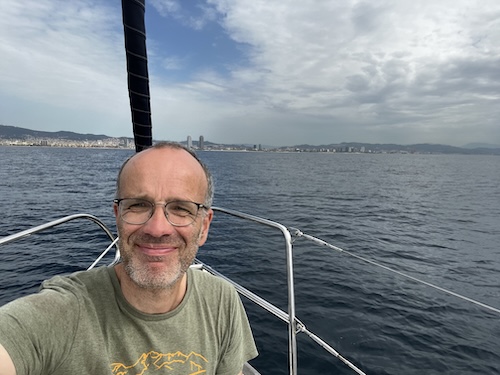
Norbert Schmidt
Founder, developer and technology lead. Amateur astronomer, TEDx speaker and co-author of research on smartphone-camera calibration, portable spectroscopy, polarimetry and night-sky measurement.
Almost fifteen years of citizen science have shaped a team with one shared conviction: technology can make the world a little better by giving people the power to observe, measure and discover. Turning citizens into scientists is the promise all three of us carry.
Enabling people to do science—and helping make the world a little better—is our shared goal. We pursue it not through abstract promises, but by giving people the power to observe, measure and discover for themselves.
The combination is incredibly powerful: a scientific question, a device millions of people already understand and a direct invitation to contribute. Citizens gain agency. Researchers gain reach and new observations. The subject becomes something people can touch, discuss and care for.
We all love this work. Enabling citizens to do amazing things, listening to the people who use what we build and sustaining the gems that grow from it are part of the same team mission.
In 2013, when “citizen science” was still unfamiliar to much of the public, Pocket Science carried this vision onto the TEDxEutropolis stage and into conversations around the world: the smartphone is more than a communication device. In the right hands, with the right method, it can become part of a scientific instrument and a worldwide observatory.
Watch “Citizen Science” at TEDxEutropolis
The early freelance work grew through years of real projects, field campaigns, communities, research partnerships and hard technical lessons. Pocket Science is now a small senior team able to carry an idea from participant experience to secure operation—and, when the science calls for it, into sensors, calibration and machine learning.
Joep and Demelza share the same DNA and spirit as Norbert: curiosity about the subject, respect for end users, belief in technology for good and the drive to keep valuable work alive. Growth strengthened the mission by making it a team responsibility.
A citizen science observatory does not succeed because its work package was delivered. It succeeds when participants understand the task, feel that their contribution matters, can get help and choose to return. Researchers need usable data and direct access. End users need respect, clarity, feedback and a product that works in the real world.
That is why outreach, onboarding, community, end-user support and interface design belong beside the scientific method and technology. We have operated communities for years and learned that listening after launch is as important as building before it.
Research projects often run for four years. Grants end and temporary teams move on, while the apps, data, participants and scientific potential remain. We look beyond that boundary from the beginning: active maintenance, secure hosting, support contracts, institutional relationships, responsible handover and a genuine continuation plan.
Long-term loyalty needs a sustainable foundation. Keeping useful public science alive cannot depend on unlimited unpaid effort. We learned that the hard way: at times, carrying valuable apps, instruments and communities without matching continuation funding put the future of the small company itself at risk.
The lesson was not to care less. It was to make ownership, responsibilities, support and the route beyond funding explicit from the beginning—so the work can endure without exhausting the people who care for it.
We pioneered citizen science app development and matured into a team that can build a focused app, selected components or a complete citizen science observatory. Our work now spans participant apps and websites, outreach, communities, scientific sensors, calibration, dashboards, data extracts, APIs, secure self-hosted infrastructure, AI and machine learning.
Those are capabilities, not a compulsory bundle. Sometimes a researcher needs one beautifully focused app. Sometimes the method needs an app connected to a sensor. Sometimes the research needs the complete environment and a partner who will operate it for years.
Researchers work directly with all three people who design, build, plan and operate the work. The mission is not attached to one founder: it lives in how the whole team listens, decides, delivers and stays responsible.
Founder, developer and technology lead. Amateur astronomer, TEDx speaker and co-author of research on smartphone-camera calibration, portable spectroscopy, polarimetry and night-sky measurement.
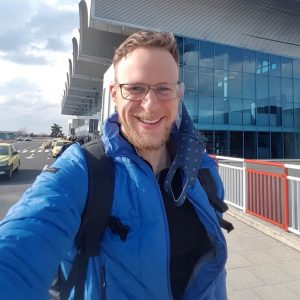
Developer and researcher bringing scientific methodology, participant insight, technical depth and the same drive to make useful work endure.
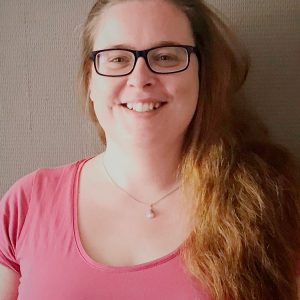
Project planning and operations, bringing the same curiosity, care for people and commitment to long-term delivery into every project.
We love the subjects researchers bring us. We want to understand them, meet the people who have spent years inside them and discover the detail that turns a merely functional application into a faithful scientific tool. We travel for field campaigns, celebrate the observation that finally makes sense and stay curious when the first answer creates a better question.
We do not sit in the researcher’s chair. We pull our chair alongside theirs. Scientific, ethical and operational authority remains with the qualified domain owners; Pocket Science contributes technical imagination, production experience and the commitment to carry the work into the hands of real people.
Pocket Science is a CitiObs Fellow and SciStarter affiliate, participates in the international citizen-science community, contributes invited expert advice to the Project Charter for the planned EOSC Citizen Science Node, works with DarkSky International and serves through astronomy networks connected with the International Astronomical Union.
These relationships matter because citizen science is a shared movement. We fully support open science and open data where participant consent, privacy, rights and the research protocol allow it. Open methods, FAIR and interoperable infrastructure, and open source where possible help valuable knowledge travel further than any one organisation or funding period.
Pocket Science is the citizen-science brand operated by DDQ B.V. Some scientific and infrastructure records use the historical form “DDQ Pocket Science”; it identifies the same Pocket Science team and body of work.
Pocket Science works with researchers, universities, research institutes and international consortia around the world. We are based in Heerlen, Netherlands; geography does not limit the science or the people it can empower.
Bring us a question worth exploring. We will listen to the researchers and the end users, learn the subject, find the right technological form and think beyond the launch. That is how technology for good becomes something people can actually use—and something worth sustaining.