Mini Secchi water observation app
A published participatory method for recording water colour and clarity with a physical Mini Secchi disk—used across international citizen science and Earth-observation programmes.
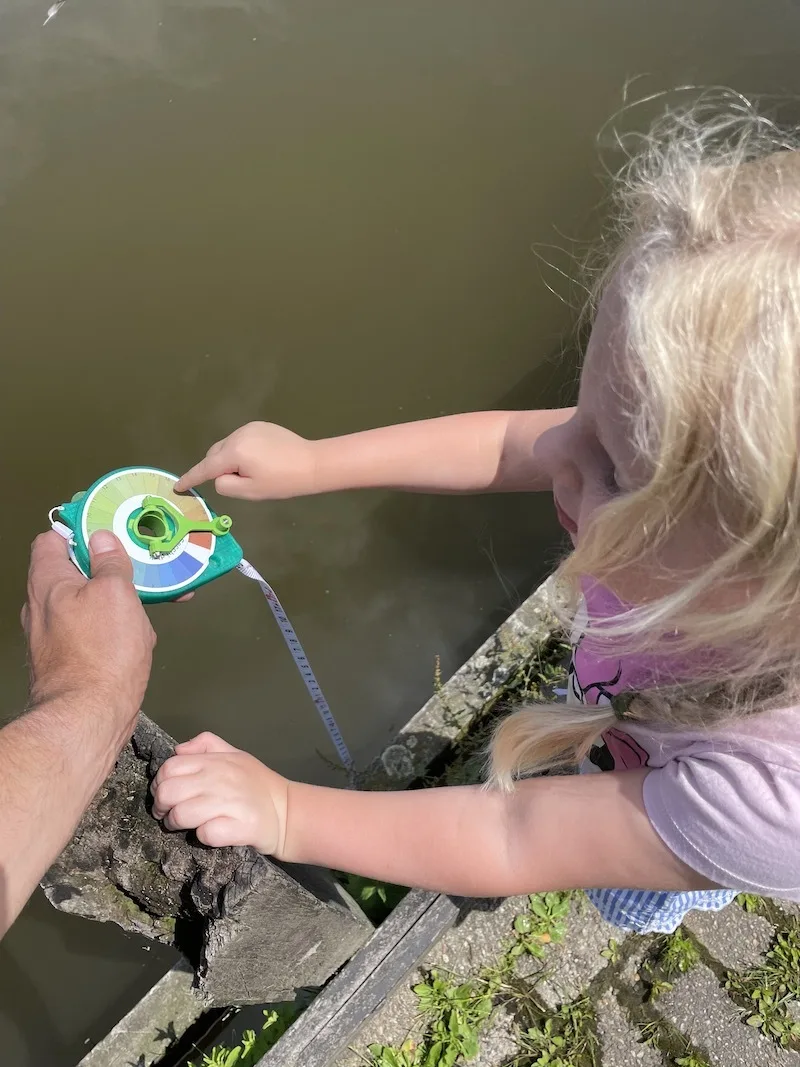
What Mini Secchi measures
The app guides a participant through observations with a physical Mini Secchi disk. The method records water clarity and colour, including colour comparison using the Forel–Ule scale, together with the context required by the project protocol.
Mini Secchi is not a general pollution detector and does not make a phone alone a professional water-quality instrument. What the data can support depends on the protocol, equipment, quality controls and research question.
Part of a complete field workflow
- Guided observations
Step-by-step field instructions help participants follow the agreed method. - Mobile and web access
iOS, Android and a browser version support different field and institutional settings. - Observation context
Location and project metadata can travel with the measured colour and clarity values. - Research access
Data handling, extracts and integrations are defined for the deployment rather than assumed from a generic claim.
What’s new in the app
The latest Mini Secchi update adds offline syncing for field observations, an updated map and multilingual support. It also includes bug fixes. These changes make the observation workflow easier to use across field conditions and audiences.
A published method in real field use
The Mini and Midi Secchi literature is much larger than one paper, with applications in lakes, coasts, estuaries and oceans. The published lineage begins with the printable device and includes participatory monitoring, applied estuarine research, an instrumented “Lab on a Secchi disk” and satellite ocean-colour evaluation.
Follow the evidence
Use Mini Secchi
- Mini Secchi for iOS
- Mini Secchi for Android
- Mini Secchi web app
- Observation map
- Physical disk information from Brewtek
Continuing development in 2026
Pocket Science’s new contract with the University of Exeter and the US SOCON collaboration supports the continuing rebuild and improvement of Mini Secchi around a method already established in the published record.
Earlier development was supported through the University of Exeter and the Gordon and Betty Moore Foundation. Mini Secchi’s continuing use includes the Participatory Ocean Color Network and SOCON connection between field observations and high-resolution satellite ocean-colour research.
Support and research deployments
For support, include the platform, app version, device, disk type and the step at which the issue occurs. Institutions planning a deployment can discuss participant guidance, data access, self-hosted services, integrations and multi-year support with Pocket Science.
Compare Mini Secchi with iSPEX2 and other citizen science water-quality sensor workflows.