Water quality sensors for research and citizen science
Two distinct routes for researchers: iSPEX2 is a smartphone spectropolarimeter for professional measurements; Mini Secchi is a published citizen-science water method for colour and clarity.
Water measurement starts with the property
“Water quality” covers many different properties. Colour, clarity, spectral reflectance, temperature, nutrients, microbial contamination and specific pollutants do not come from one universal phone sensor. A credible project first identifies the property and reference method, then designs the instrument, protocol, participant guidance, calibration, quality control and data infrastructure around it.
Pocket Science has two prominent but different water-observation lineages. iSPEX2 is currently a professional research instrument, not a citizen-science app or project. It supports portable above-water radiometry on a smartphone. Mini Secchi supports participatory observations of water colour and clarity. Both connect a physical method to software and a research workflow, but their audiences, measurements and readiness differ.
Two water quality sensor lineages
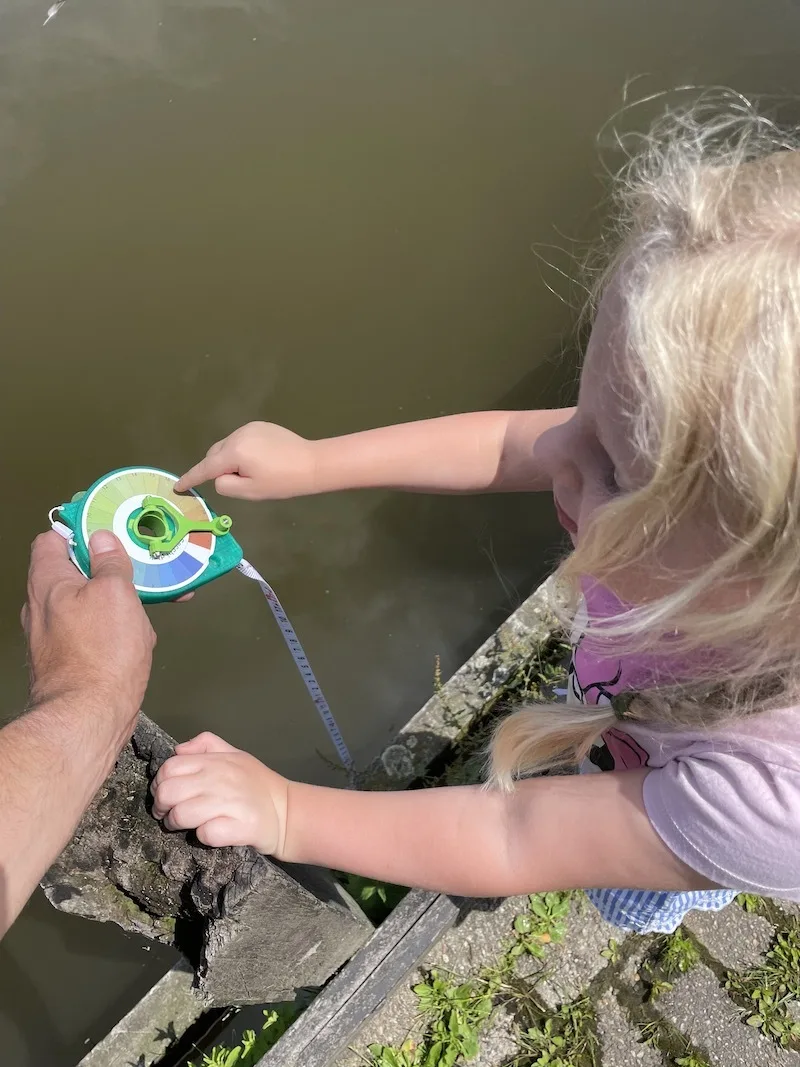
Mini Secchi
A physical disk and guided app for observing water clarity and colour through established Secchi-depth and Forel–Ule methods, with a published research record across international programmes.
Explore Mini Secchi →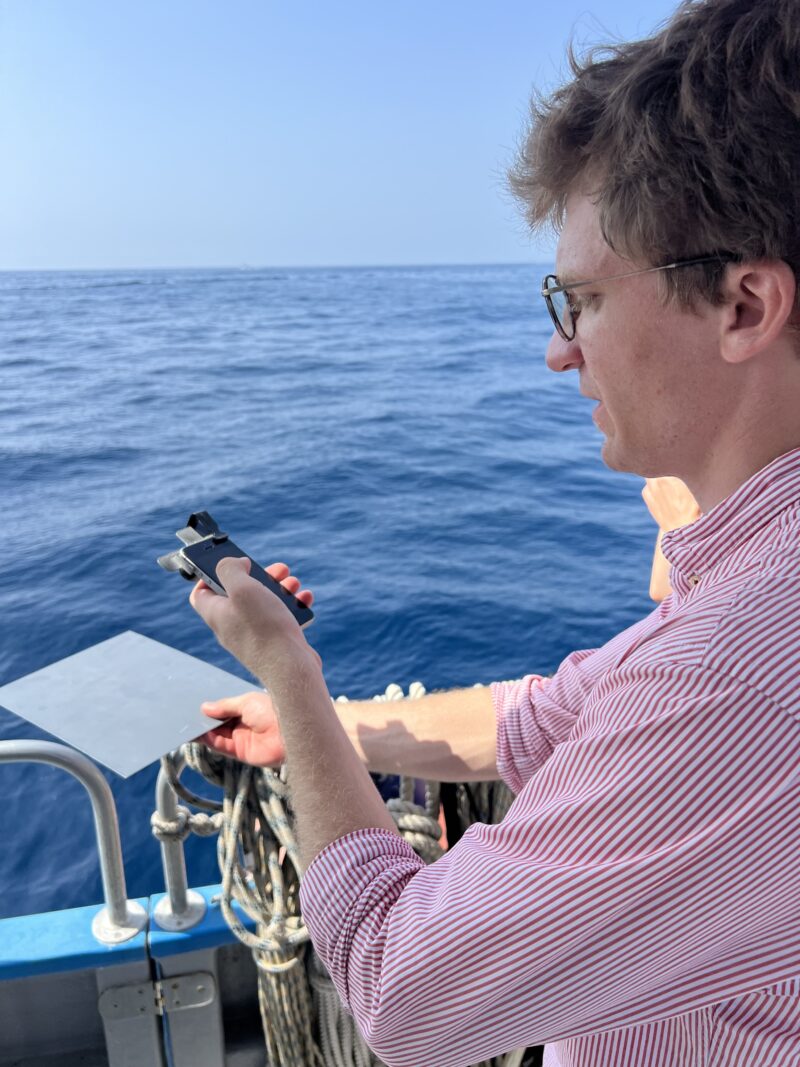
iSPEX2
A modular smartphone spectropolarimeter for researchers. PML successfully derived above-water Rrs; campaign comparisons use professional references including WISP-3 and So-Rad/TriOS-RAMSES.
Explore iSPEX2 →Mini Secchi: water colour and clarity
Mini Secchi modernises two established visual observations. Participants lower a compact disk to record Secchi depth and compare natural water colour with the Forel–Ule scale. The app guides the procedure and stores observation context for the research programme.
The research record spans the original printable device, Lake Vembanad citizen monitoring, estuarine research, satellite-product evaluation, Horizon 2020 MONOCLE and an instrumented open-source profiling prototype. In 2026 Pocket Science signed a new contract with the University of Exeter and the US SOCON collaboration to rebuild and improve Mini Secchi.
Read the Mini Secchi publications and project evidence
iSPEX2: above-water spectral reflectance
iSPEX2 places a calibrated optical add-on in front of a smartphone camera. A defined sequence of water, sky and grey-card observations supports the derivation of above-water Rrs. PML successfully derived Rrs with iSPEX2 during professional campaigns, supported extensively by Pocket Science. The result is a portable research route that can be compared directly with established ocean-colour radiometry in the tested workflow.
The preserved evidence includes WISP-3 reference data from Venice, selected So-Rad matchups from the PML campaign and a reference protocol built around systems such as So-Rad with TriOS-RAMSES radiometers. This supports comparison of above-water Rrs measurements; it is not a claim that the instruments have identical automation, calibration traceability or operating ranges.
The evidence chain includes the 2014 iSPEX1 atmospheric campaign paper, the 2019 SPECTACLE camera-calibration framework, the 2020 iSPEX2 instrument paper, 2022 research on calibrated smartphone radiometry above water, and the 2024 preregistered aquatic validation. The public project documents continuing international campaigns in 2025 and 2026. Pocket Science now maintains a complete local preservation mirror of its 11 wiki pages, 359 public files and source integrity metadata.
iSPEX2 is not yet a consumer-ready general water-quality sensor. The research batch is fully distributed, no units can currently be ordered and air-quality use has not been implemented or validated for iSPEX2.
Read the iSPEX2 publications and open validation evidence
Which method fits which question?
| Need | Relevant route | Important boundary |
|---|---|---|
| Participatory water colour and clarity | Mini Secchi | A visual field method, not a universal pollution or safety test. |
| Above-water spectral Rrs research | iSPEX2 | Research instrument requiring protocol, calibration and processing; currently unavailable to order. |
| Temperature, conductivity, oxygen or another existing sensor | A sensor-connected app | Validity follows the selected instrument, calibration and deployment method. |
| A new camera-derived or optical property | Research and validation phase | The method needs an appropriate reference before field claims are made. |
| Participation, dashboards and long-term data access | A complete observatory | Governance, support and operating lifetime need explicit ownership. |
What Pocket Science can build
- Guided field apps
Mobile and web procedures, offline work, multilingual interfaces, context and method-specific checks. - Sensor and camera integration
Connected instruments, optical attachments, phone cameras and processing where the research requires them. - Calibration and validation workflows
Reference comparisons, provenance, quality indicators and versioned processing with scientific partners. - Researcher tools
Dashboards, review routes, documented exports, APIs and FAIR-data connections. - Self-hosted infrastructure
Managed security, privacy, backups and monitoring without dependence on an external public-cloud platform. - Participation and continuity
Recruitment, onboarding, feedback, end-user support and an operating plan beyond launch.
Evidence, not a black box
For Mini Secchi, start with the 2025 open-access synthesis and its cited project literature. For iSPEX2, inspect the preserved open programme archive and preregistered aquatic validation. Pocket Science keeps the distinction between a published method, a successful research result and a consumer-ready product explicit.
Plan a citizen science water project
Bring the water property, reference method, intended participants, field environment, platforms, data needs and operating lifetime. Pocket Science can help turn that into a scoped sensor-connected app or a complete participatory observatory. Start with the research question.